

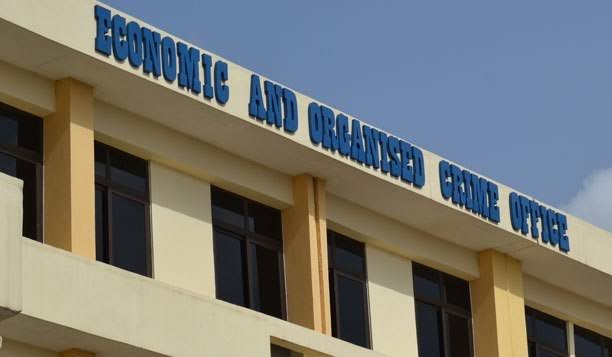

Dennis “Miracles” Aboagye’s arrest was confirmed by the Economic and Organised Crime Office (EOCO) yesterday. He has been charged with conspiracy to steal and stealing, for allegedly misappropriating GH¢55 million in state funds.
But what has caused growing controversy is his bail condition, which was pegged at GH¢50 million an amount almost equal to what he is accused of stealing.
His lawyer, Samuel Atta Akyea, has called the bail conditions harsh and punitive.
“I see clearly that the bail terms are cruel, and it is a way to punish him some more,” Atta Akyea said.
But Mr. Aboagye’s case is not an outlier. Since last year, concerns have been growing over record-high bail conditions set for politically exposed persons accused of wrongdoing.
In the case of the GH¢1.4 billion SML and GRA scandal, the five accused were each given a bail sum of GH¢50 million, with two sureties to be justified by an Accra High Court.
In the NPA extortion and money laundering case, the former NPA boss, Dr. Mustapha Hamid, and nine others were given a bail sum of GH¢2 million. Dr. Hamid was asked to produce two sureties, each earning a net monthly salary of not less than GH¢5,000, with the amounts to be justified.
On October 22, 2025, the Attorney General, Dr. Dominic Ayine, announced he would file charges against the former Buffer Stock CEO, Hanan Abdul Wahab, accusing him of stealing, conspiracy to steal, and wilfully causing financial loss to the state over an alleged GH¢60 million. His bail was set at GH¢100 million, with six sureties, four of whom had to be justified with landed property. His wife, a co-accused, was granted GH¢50 million bail.
The former National Signals Bureau boss, Kwabena Adu Boahen, together with his wife, were charged with embezzling GH¢49 million in state funds. Adu Boahen’s bail condition was set at GH¢120 million and later reduced to GH¢80 million.
In the National Service Scheme (NSS) ghost names scandal, twelve individuals were charged, with losses estimated at GH¢2.2 billion. The former NSS boss, Osei Assibey Antwi, initially received GH¢800 million bail, later reduced to GH¢623 million by the High Court.
Bail conditions are legal in Ghana and firmly enshrined in the Constitution. Article 14(4) states that if a person is not tried or their trial is not completed within a reasonable time, they have a constitutional right to be released on bail, either unconditionally or on reasonable conditions.
The New Patriotic Party (NPP) and others argue that when the dictates of the Constitution are not adhered to and harsh bail conditions are repeatedly imposed, the practice risks undermining the presumption of innocence and eroding public confidence in the judicial system.
Source: Desmond Adom