


It was a quiet Friday afternoon Good Friday around 3 p.m. at a mechanic shop in Breman West in the Greater Kumasi, of the Ashanti region. I had gone there to fix my brakes. The place was alive with the usual rhythm: the clanking of metal, the smell of grease, and conversations layered with laughter. Then, a moment unfolded that silenced everything and everyone.
A young girl, not more than 11 years old, stood beside her father, who had also brought his car for repairs. She looked smart and adorable, and having a natural flow with kids, I struck up a conversation with her.
Princess, what’s your name? I asked. Clara, she mentioned, quickly adding her class. ” I’m in class 6″. Then came the stroke that broke the camel’s back: “What do you want to become in the future…an Engineer or a nurse? I smiled at her seemingly innocent face.” Without hesitation, she responded in Twi, “Aaha oooo… Sɛ menyiniaa metu gala.” to wit, “No way… I will venture into illegal mining (galamsey) when I grow up.”
The air froze. Her parents stared at her in disbelief. The mechanics paused mid-task. I stood there, stunned. How does a child at such a tender age dream not of becoming a doctor, teacher, or pilot, but of engaging in illegal mining?
What has shifted so drastically in our society that galamsey has become a career aspiration? I asked myself, while trying to gather quick answers.
A Disturbing Shift in Dreams
For generations, children have imagined futures filled with fantasy, dignity, dreaming of white coats, uniforms, offices, and service to humanity. Career days in schools across Ghana have long been symbolic of hope: children dressed as doctors, engineers, soldiers, and teachers, embodying dreams shaped by admiration, aspiration and purpose.
But today, something deeply unsettling is emerging. When a child sees illegal mining not as a crime, but as a viable and even an attractive livelihood, it signals an emergence of a very dangerous trend – moral and societal breakdown. It reflects what children observe, absorb, and ultimately normalize.
The Galamsey Reality: A Nation Under Siege
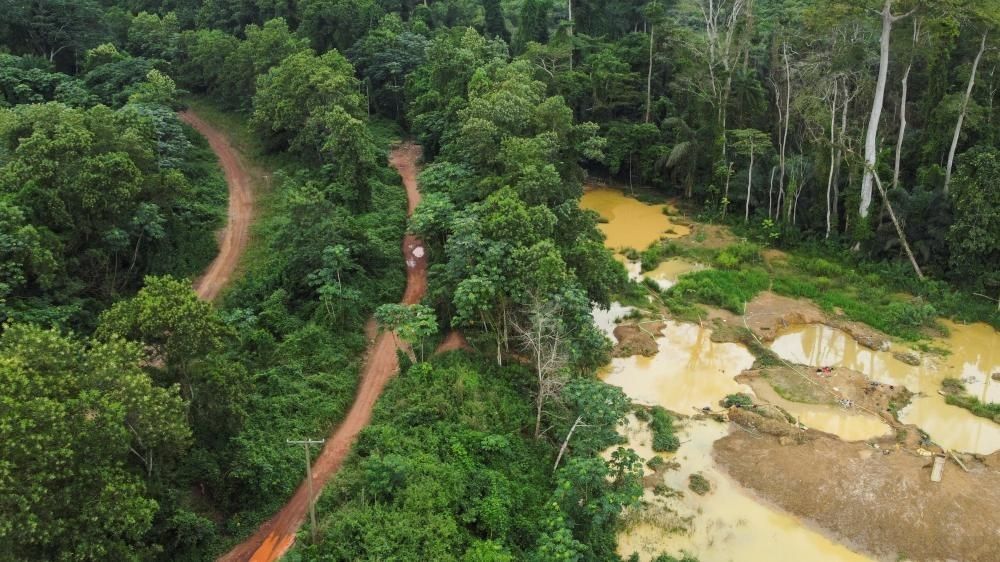
Illegal mining, widely known as galamsey, has evolved from a hidden activity into a national crisis. Across many parts of Ghana, rivers once pristine, like the Pra, Ankobra, and Offin, have been reduced to muddy, lifeless streams. Forest reserves are stripped bare, with political actors ripping the hearts of our forests reserves with impunity.
Fertile farmlands are destroyed, leaving farmers without livelihoods.
Entire communities have been transformed into hazardous zones. Pits left uncovered claim lives—often young men chasing quick money, and, indeed, they get them.
Families are torn between survival and sustainability. In many mining communities, galamsey has become the fastest route to income, overshadowing aged old occupations like farming. The result? A dangerous economic distortion where illegal activity outcompetes lawful work.
Politics and the Complicated Fight
The fight against galamsey has not been straightforward. While successive governments have launched campaigns and task forces, the issue has often been entangled in political interests. Enforcement in most cases appears selective. Crackdowns intensify and fade with political cycles.
Efforts to Combat the Menace
Despite the complexities, several key actors continue to play critical roles:
Political leadership has introduced policies, bans, and military-led operations aimed at halting illegal mining. These efforts are not enough. But one thing remains clear- they show recognition of the galamsey threat.
Security agencies have conducted raids, seized equipment, and dismantled illegal mining camps. Their presence has, at times, reduced activity in high-risk zones.
The Hidden Cost: Education in Crisis
Perhaps the most heartbreaking impact of galamsey is on education.
In many mining communities, children are abandoning classrooms for mining sites. The lure of quick money, sometimes earning in a day what a parent might struggle to make in weeks, is too strong. School attendance drops. Concentration in class weakens. Dreams shrink.
Teachers report cases where students come to school exhausted after night shifts at mining sites. Others disappear entirely, choosing income over education. In some areas, school environments themselves are affected; polluted water, unsafe surroundings, and reduced community emphasis on academic success.
A generation is quietly being redirected, from classrooms to pits.
A Nation at a Crossroads
That little girl’s words were not just shocking—they were revealing. They exposed a deeper truth about what our society is becoming. When the next generation begins to idolize destruction as opportunity, we are no longer just facing an environmental crisis—we are confronting a moral emergency.
Ghana stands at a crossroads. The choices we make today will determine whether our rivers will flow clean again, whether our lands will be fertile, and whether our children will dream beyond survival.
We cannot afford silence. We cannot afford indifference.
Because if an 11-year-old can say, without fear or doubt, that her future lies in galamsey—then the real question is no longer about her dream.
It is about our failure. I pause.