

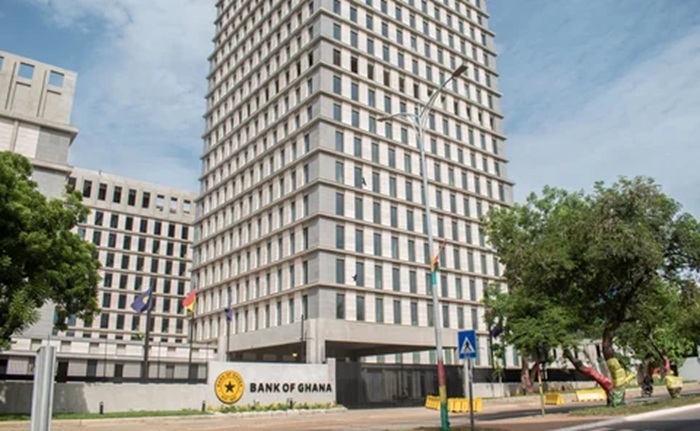
The Bank of Ghana has raised concerns over the effectiveness of monetary policy transmission and the banking sector’s ability to support private sector activity, even as the economy records improving macroeconomic conditions and stronger financial sector indicators.
Opening the 130th Monetary Policy Committee meeting, Governor, Dr Johnson Pandit Asiama said policymakers would assess whether current monetary conditions are adequately influencing lending rates and credit expansion across the economy.
“This committee has to assess whether this is sufficiently effective in influencing lending conditions going forward. Will it continue to drive credit growth? Will it continue to support broader economic activity?,” Dr Asiama said.
The remarks come as the central bank increasingly shifts attention from macroeconomic stabilisation toward the transmission of financial sector improvements into productive lending and economic growth.
Recent banking sector data contained in the Bank of Ghana’s March 2026 Monetary Policy Report showed that while private sector credit continued to expand, banks remained heavily concentrated in short-term government securities.
Bills accounted for 65.0 percent of banks’ investment portfolios in February 2026, up sharply from 44.5 percent a year earlier. In contrast, the share of long-term securities declined to 34.5 percent from 55.1 percent over the same period, indicating a stronger preference for shorter-duration assets despite improving macroeconomic conditions.
The data also showed that gross loans and advances increased by 15.6 percent to GH¢108.2 billion in February 2026, slower than the 25.2 percent growth recorded a year earlier. Private sector credit rose by 18.7 percent to GH¢103.7 billion, compared with 26.9 percent growth in February 2025.
Public sector credit, however, contracted by 27.8 percent to GH¢4.6 billion, reducing its share of total industry credit to 4.2 percent from 6.8 percent a year earlier. Consequently, the private sector’s share of total credit increased to 95.8 percent. The services sector remained the largest recipient of industry credit, accounting for 36.7 percent of total loans, followed by commerce and finance at 23.0 percent, while manufacturing maintained an 11.0 percent share.
Despite the moderation in credit growth, the banking sector’s asset quality improved. The central bank reported declines in both the stock of non-performing loans and the industry’s NPL ratio in February 2026 compared with the previous year.
Dr Asiama said the economy had improved “meaningfully” since the MPC’s last meeting in March, supported by reforms, stronger external buffers and renewed investor confidence. Ghana’s current account surplus in the first quarter exceeded the same period in 2025 by US$652 million, while the successful issuance of a seven-year domestic bond signalled improving market confidence.
However, the governor warned that the prolonged Middle East conflict, rising global energy prices and domestic energy supply disruptions were creating new inflation risks that could complicate monetary policy decisions and lending conditions.
He noted that headline inflation had increased for the first time since December 2025, while external commodity price pressures and elevated business costs could weaken inflation expectations if not carefully managed.
“The economy will need a strong banking sector…and that the banking system is made to deliver on credit expansion,” Dr. Asiama said, adding that financial stability concerns must continue to be addressed
The governor also linked future banking sector reforms to Ghana’s proposed 36-month non-financing Policy Coordination Instrument with the International Monetary Fund, which will include measures to improve monetary policy transmission, liquidity forecasting and the inflation-targeting framework.
Source: thebftonline