


After three years of fiscal discipline, Ghana completes its Extended Credit Facility and pivots to a new policy framework even as the IMF flags SOE liabilities and commodity price shocks as threats to recovery.
Ghana has officially completed its US$3 billion International Monetary Fund bailout programme, drawing the curtain on three years of arduous economic reforms designed to restore fiscal stability and rebuild investor confidence.
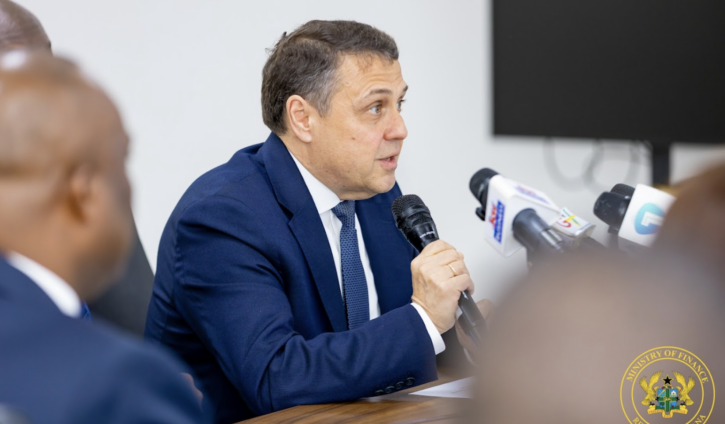
Speaking at a joint press conference in Accra, IMF Mission Chief Ruben Atoyan said interest in Ghana from the global investment community is on the rise, with numerous investors approaching the Fund directly to assess the country’s economic outlook.
“We do see a lot of interest in Ghana,” Atoyan said, signalling that early signs of recovery are registering among international markets.
Despite the milestone, Atoyan cautioned that the road ahead remains uncertain. He identified unresolved liabilities tied to state-owned enterprises (SOEs) as a particular concern, noting that SOE-linked debt has historically been a major driver of Ghana’s fiscal crises. He also pointed to volatility in global gold prices and broader geopolitical tensions as potential threats, given gold’s outsized role in Ghana’s export economy.
On May 15, 2026, Ghana simultaneously completed the Extended Credit Facility (ECF) and requested a new 36-month Policy Coordination Instrument (PCI) a non-financing arrangement that prioritises policy credibility and fiscal discipline over direct financial support. Atoyan said the PCI will focus on strengthening institutions and ring-fencing central government finances from risks originating outside it.
“From stability, we’ll build resilience, and from resilience, we’ll build an economy that will benefit the masses.”- Cassiel Ato Baah Forson, Finance Minister
Finance Minister Cassiel Ato Baah Forson declared that the government’s focus is now shifting decisively from economic stabilisation to growth and job creation. He announced a new flagship initiative branded “the new economy” aimed at catalysing key sectors and expanding employment opportunities across Ghana.