

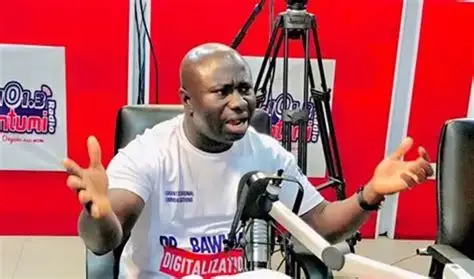
The Ashanti Regional Communications Director of the New Patriotic Party (NPP), Paul Yandoh, has criticized the government of the National Democratic Congress (NDC), accusing it of misleading Ghanaians about the reasons behind the recent increase in electricity tariffs.
According to Mr. Yandoh, “the NDC government has created the impression that the increase in electricity bills is a directive from the International Monetary Fund (IMF).” However, he argued that there is nothing in the agreement with the International Monetary Fund that requires Ghana to increase electricity tariffs every three months.
He explained that “the IMF only advised that electricity tariffs should be cost-reflective, meaning prices should reflect changes in certain economic factors.”
Mr. Yandoh added that three key elements determine whether tariffs should increase, suggesting that the government may be misinterpreting the IMF’s guidance.
The NPP communications director further stated that the party had previously informed Ghanaians that “inflation in 2024 was around 23 percent but has been reduced to about 5 percent,” questioning why prices are still increasing across the country.
Mr. Yandoh also referred to what he described as the NDC government’s earlier explanation that “price increases would occur when the US dollar becomes stronger than the Ghanaian cedi.” According to him, the cedi has recently strengthened against the dollar, yet the prices of goods and services continue to rise.
He therefore questioned “why electricity tariffs have increased by more than 28 percent despite claims that fuel prices and inflation have been reduced.”
Explaining further, Mr. Yandoh referred to the scale block charge system used in electricity billing, which determines how much consumers pay based on the amount of electricity they use, measured in kilowatt-hours (kWh).
He stated that “in 2024, consumers using between 0 and 300 units of electricity were charged GH¢1.60 per unit, but by 2026 the charge had increased to GH¢1.92 per unit.”
Mr. Yandoh concluded by accusing the NDC government of failing to improve the economic situation in the country, insisting that “their policies have instead made life more difficult for Ghanaians.”