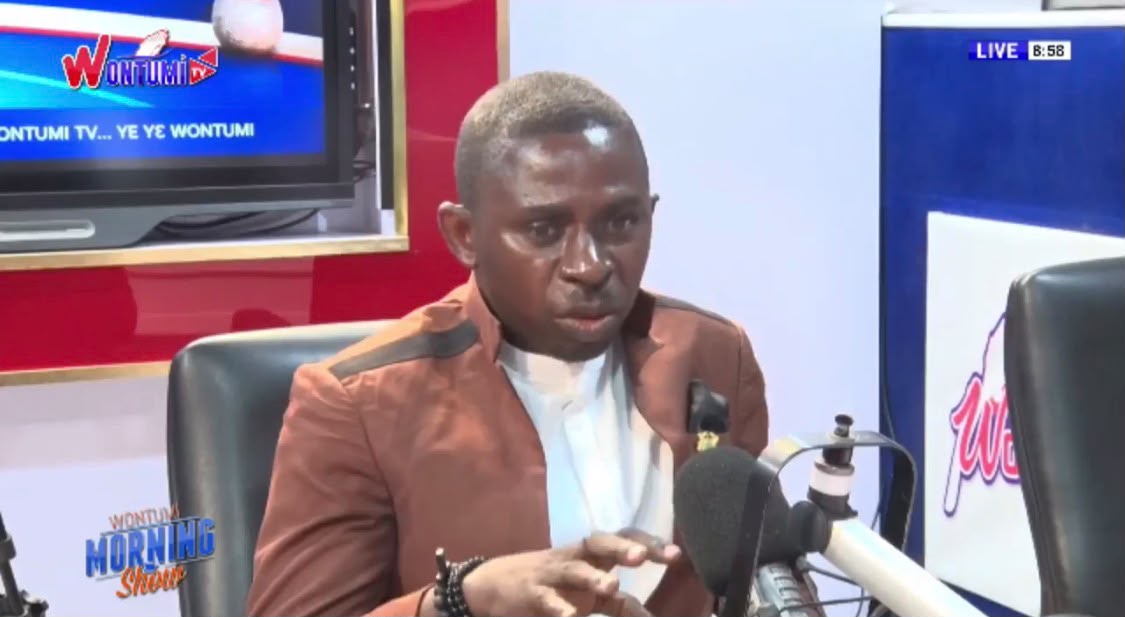
An Ashanti Regional Communications Team Member of the New Patriotic Party (NPP), Mr. George Ackom, says he predicted about two months ago that students and parents would face difficulties with the Senior High School placement process.
He said the decision by the National Democratic Congress (NDC) government to release students’ results before they select their preferred schools was expected to address the challenges associated with the placement system.
However, according to him, the situation has become worse compared to when the NPP was in government.
Speaking on the Wontumi Morning Show with host Oheneba Nana Asiedu, Mr. Ackom said the current challenges in the education sector were not surprising to him.
“Two months ago, when the school placement process started, I predicted that students and parents would face serious difficulties. What we are seeing today is exactly what I anticipated.”
“The NDC changed the system by bringing out the results before students could choose their schools. We thought this new approach would solve the challenges, but unfortunately, the situation has become worse. When the NPP was in government, students were able to select their preferred schools before the results were released. We believed the new system would improve the process, but the challenges are still there.”
Mr. Ackom also criticised the NDC government over what he described as its inability to properly manage the Free Senior High School (Free SHS) programme introduced by the NPP government.
“The failure of the NDC to properly manage Free SHS does not come to me as a surprise because the NDC has no clear understanding of how to manage the programme. Let’s not blame the NDC because the entire party has no idea about Free Senior High School. It will take a competent party like the NPP to manage and improve Ghana’s education system.”
He explained that the Free SHS policy was introduced to reduce the financial burden on parents and ensure that every eligible student could access secondary education without paying school fees.
“The Free SHS programme was designed to help every student go to school without having to pay school fees. That is the fundamental idea behind the policy. The cost of educational items and other requirements for students is becoming a serious burden on parents. This is why Free SHS must be properly managed to achieve its original purpose.”
Mr. Ackom further called for greater attention to specialised schools, stressing that the term should not be restricted to institutions serving persons with disabilities.
“When I talk about specialised schools, I am not only talking about schools for people with disabilities. There are other specialised areas that require government attention and investment”.
He also highlighted the importance of Technical and Vocational Education and Training (TVET), saying the NPP introduced the initiative to equip young people with practical skills.
“The NPP introduced TVET because we wanted to strongly support our children to acquire practical skills that can help them become useful to themselves and the country. Education should not only be about academic qualifications. We must also give our young people the skills they need to work, create businesses and contribute to national development.”
Mr. Ackom maintained that students and parents are currently experiencing greater difficulties in the education sector than they did under the previous NPP administration.
“All that I am trying to say is that, in our time, certain things, including the difficulties faced by students and parents, are much tougher than when the NPP was in power. We must look at the challenges facing parents and students and find practical solutions instead of making the situation more difficult for them.”
“The government must ensure that the Free SHS programme continues to serve the purpose for which it was introduced and that no parent is unnecessarily burdened. If we want to improve education in Ghana, we must invest in the students, the schools, the teachers and the infrastructure. We cannot afford to neglect any of these areas.”
Free SHS Needs Competent Management – George Ackom