

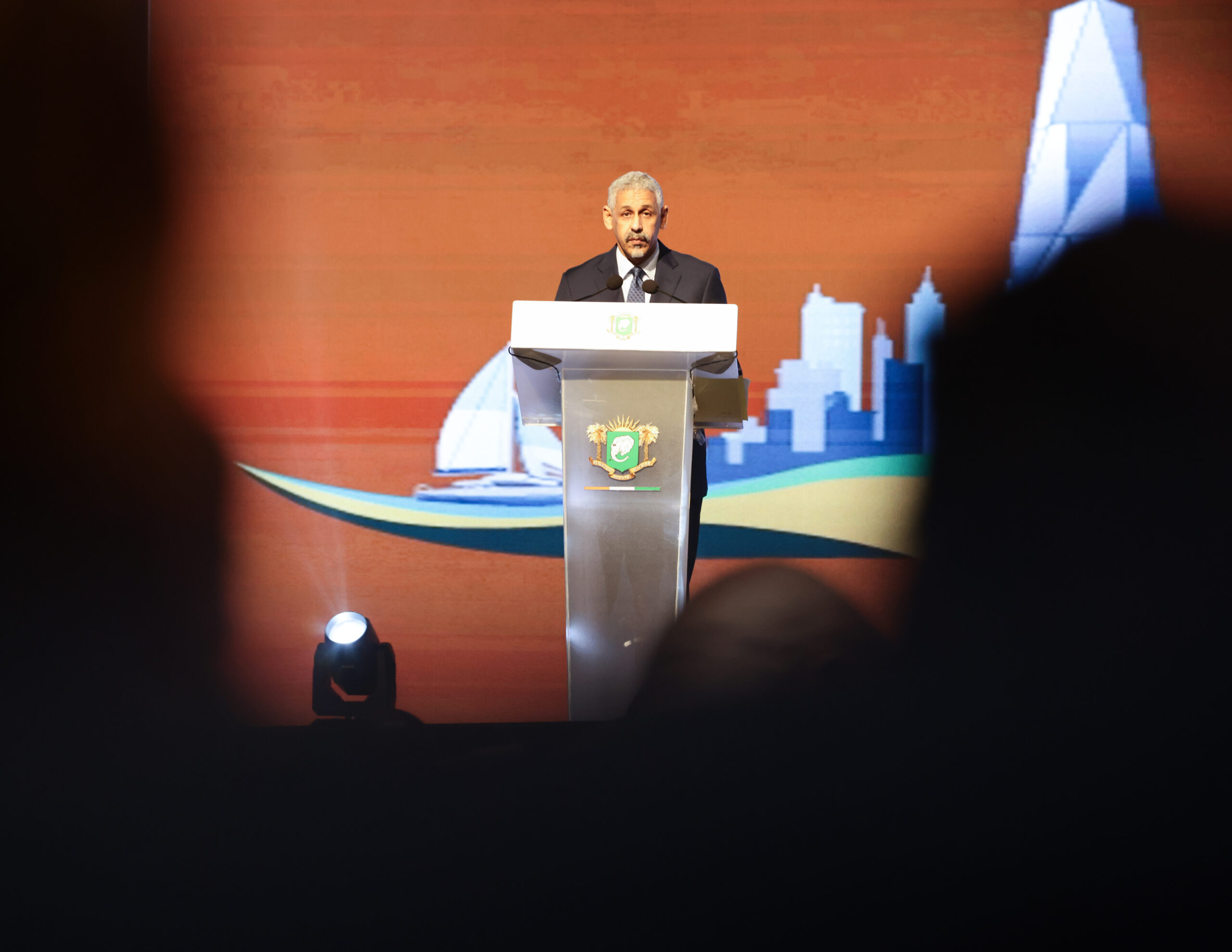

From the heart of Côte d’Ivoire’s commercial capital, Abidjan, the government has unveiled an ambitious five-year economic strategy with the launch of its National Development Plan (NDP) 2026–2030, aimed at mobilizing massive investments and positioning the country among Africa’s fastest-rising economic powers.
Speaking at the Consultative Group Conference for Financing the National Development Plan 2026–2030, the Ivorian government announced that it had secured international financial commitments totaling approximately $80 billion. The pledges came from major international financial institutions, including the World Bank, the African Development Bank, the Islamic Development Bank, and the European Union, alongside representatives from domestic and international private sector investors.
The commitments exceed by fourfold the country’s estimated financing gap of $20.3 billion, which the government had sought to bridge under the development plan. Officials described the strong response as a clear vote of confidence in Côte d’Ivoire’s economic outlook and long-term development trajectory.
From Recovery to Economic Transformation
Ivorian Minister of Planning and Development Souleymane Diarrassouba said the 2026–2030 National Development Plan marks not only the start of a new phase but also the continuation of a development strategy launched in 2012, following years of political and security instability.
He said the government’s primary objective is to sustain the structural transformation of the economy while consolidating social gains, with the goal of elevating Côte d’Ivoire to upper-middle-income status by 2030.
The plan prioritizes strategic sectors including education, infrastructure, poverty reduction, and the development of domestic value chains, particularly the cocoa industry, a cornerstone of the Ivorian economy. It also aims to strengthen the country’s resilience to global economic shocks and the impacts of climate change.
$209 Billion Investment Roadmap
Presenting the plan on behalf of President Alassane Ouattara, Vice President Tiémoko Meyliet Koné said the new development programme aims to achieve an average annual economic growth rate of 7.2% between 2026 and 2030.
He said total planned investments under the strategy amount to $209 billion, with the private sector expected to provide $146.9 billion, equivalent to 70.2% of total financing. Public funding is expected to account for the remaining 29.8%.
Koné added that the plan is built around four core pillars: sustaining economic growth, strengthening stability, providing investors with a clear and predictable policy framework, and enhancing the economy’s resilience to global and domestic challenges.
The Islamic Development Bank Supports Strategic Projects
The conference saw a notable presence from the Islamic Development Bank, which announced a new $235 million financing package to expand the highway connecting Abidjan and San Pedro.
This project is of strategic importance, as it connects the Port of Abidjan—one of West Africa’s largest ports—with the Port of San Pedro in the country’s southwest, which is a global hub for raw cocoa exports.
A $750 million framework agreement was also announced to support the private sector through the International Islamic Trade Finance Corporation, along with investment guarantees totaling up to $600 million to boost the confidence of international investors.
Energy and Manufacturing: The Challenges of the Coming Phase
Through these projects, Abidjan aims to expand its energy capacity, strengthen domestic industries, and transform raw materials — particularly agricultural commodities — into higher value-added products. The government also seeks to generate new employment opportunities and improve access to water and sanitation services.
An Emerging Economy After a Decade of Stability
The plan comes more than a decade after Côte d’Ivoire began recovering from the political crisis that affected the country between 2010 and 2011 following a disputed presidential election.
Since 2012, the country has entered a period of political stability and sustained economic expansion. The Ivorian economy has recorded average growth of more than 6% in recent years, while reducing its budget deficit and maintaining inflation rates under control.
This economic performance has led the International Monetary Fund (IMF) to classify Côte d’Ivoire among countries facing a low risk of debt distress, placing it among the more stable economies in sub-Saharan Africa.
With its $209 billion development roadmap, Abidjan is seeking to move beyond a phase of rapid growth toward deeper economic transformation, reinforcing its ambition to establish Côte d’Ivoire as a leading economic hub in West Africa.