

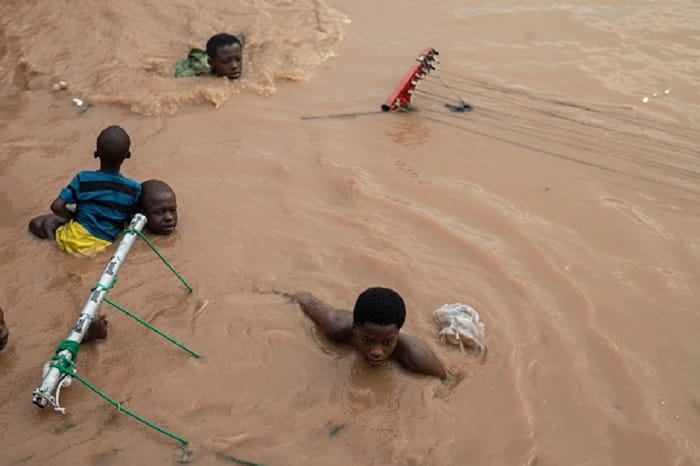
The Ghana National Fire Service (GNFS) has disclosed that, so far, more than 150 people have been rescued, while at least 12 bodies have been retrieved following the devastating floods that swept through parts of the Greater Accra Region after hours of heavy rainfall on June 29, 2026.
Providing an update on the rescue operations, a member of the GNFS Public Relations Department, Alex Nartey, described the day as one of the busiest for firefighters, stressing that their responsibilities go beyond firefighting to include emergency rescue operations during disasters.
Speaking on TV3’s *Ghana Tonight* programme, Nartey said rescue teams had been deployed to several flood-hit communities, with the number of people rescued exceeding 150 as of 10:00 p.m. on June 29.
“The total number of people rescued will be in excess of about 150 people,” he said.
According to him, the successful rescue operations were carried out in communities including Kasoa, Taifa, Weija, Dome and several other flood-affected areas where residents became trapped after floodwaters submerged homes and roads.
Nartey also gave an update on the casualties recorded during the disaster, disclosing that firefighters recovered the body of an elderly man believed to be in his 60s at Alajo before handing it over to the police for the necessary investigations and preservation.
He added that although the confirmed death toll stood at 12, the actual figure could be higher, as several people were still reported missing.
“The death toll that I can confirm is about 12 people. The breakdown is as follows: two people, a mother and her husband, at Tema New Town unfortunately lost their lives; one person at Alajo; at Achimota Alogboshie, a woman and a child lost their lives; at Odawna, we had four people die; and at Achimota Abofu, one person died. So far, the confirmed death toll is 12, but it looks like it could be more. However, for verifiable purposes, I’m sticking to 12,” Nartey stated.
Beyond the rescue figures and casualty update, the GNFS spokesperson also reflected on what he believes continues to fuel the recurring flooding experienced in parts of the country whenever there are heavy rains.
According to Nartey, although governments can invest in drainage infrastructure and undertake engineering interventions to reduce flooding, such efforts alone will not permanently solve the problem if the public fails to change its attitude towards environmental sanitation.
He maintained that indiscriminate disposal of waste and other human activities that obstruct drainage systems remain major contributing factors to the perennial flooding situation.
Nartey stressed that until there is a significant change in public behaviour, Ghana risks experiencing similar flood disasters repeatedly despite improvements in drainage infrastructure.
The June 29 floods left several communities across the Greater Accra Region submerged, destroying properties, disrupting transportation, and triggering large-scale emergency rescue operations by the Ghana National Fire Service and other emergency response agencies.