

The Ghana Immigration Service (GIS) has urged landlords across the country to request proof of identity from prospective tenants before renting accommodation to them, saying the measure would help establish tenants’ immigration status and support investigations in cases of crime.
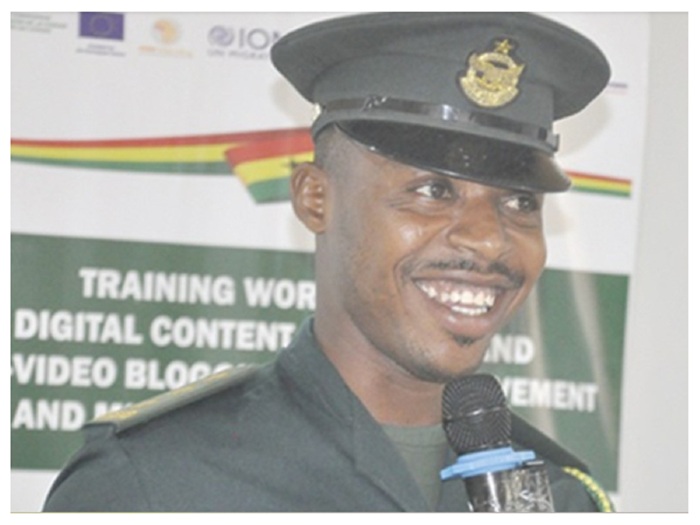
Speaking at a migration workshop in Ho, the Public Affairs Officer of GIS at Aflao, DSI Justice Kudzo Normeshie, said verifying tenants’ identities was necessary to strengthen security and improve traceability.
According to a report by graphic.com.gh dated May 21, 2026, DSI Normeshie made the remarks during a workshop on ‘Reframing Narratives on Free Movement of Persons and Migration in West Africa’ attended by about 100 journalists and student journalists from media houses and tertiary institutions in the Volta Region.
The workshop formed part of a broader training programme on ‘Digital Content Creation and Mini-video Blogging on Free Movement in West Africa,’ jointly funded by the European Union and the ECOWAS Commission and implemented by Media Response (Ghana) with support from the GIS.
Other supporting agencies included the International Organisation for Migration, the International Labour Organisation, the International Centre for Migration Policy Development and the ECOWAS@50.
DSI Normeshie explained that although the ECOWAS protocol guarantees free movement across borders, travellers within the sub-region are still required to possess valid travel or identity documents to benefit from the arrangement.
“In all cases, security is paramount and there are still established procedures for crossing the frontier,” he said, adding that nationals from ECOWAS member states who choose to live in Ghana must obtain residence permits.
He also cautioned travellers against abusing the 90-day free stay policy, warning that overstaying could attract penalties.
On immigration reporting, DSI Normeshie urged journalists to avoid uncompassionate language when reporting on migrants, particularly those displaced by circumstances beyond their control.
“For instance, a citizen of a sister country who fled a conflict situation in his country and relocated to Ghana may be an irregular immigrant but not an illegal immigrant,” he explained.
He further advised against hate speech, harsh descriptions and victim blaming in media coverage of migration issues, stressing that vulnerable migrants should not automatically be portrayed as criminals.
Similarly, Executive Director of Media Response, Samuel Dodoo, called on journalists to be mindful of terminology when reporting on migration matters, saying there was a need to strengthen media capacity for informed and responsible reporting on migration and free movement in West Africa.
Source: Ghanaweb