

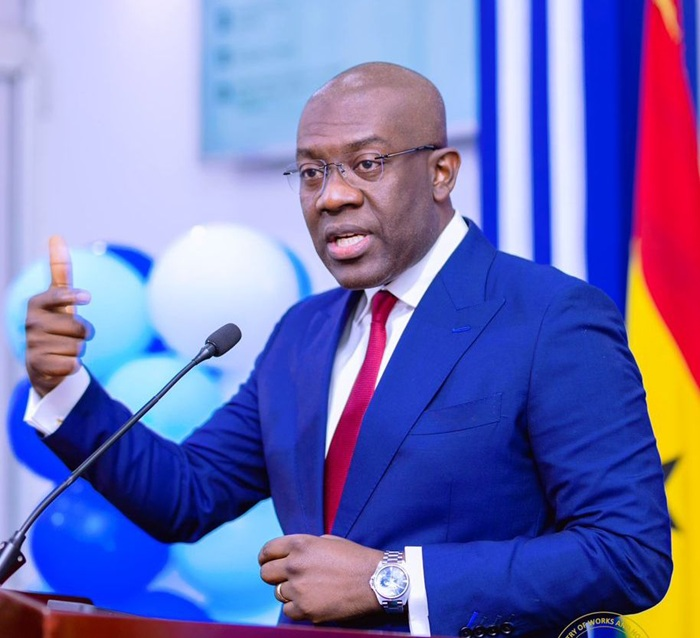
The Bank of Ghana (BoG) has, through its latest financial statement explanation, effectively confirmed claims by the Ranking Member on Parliament’s Economy and Development Committee, Kojo Oppong Nkrumah, that the central bank’s total losses for 2025 amount to about GH¢34 billion.
In an official “2025 Financial Statements: Questions and Answers” document released in May 2026, the Bank disclosed that it recorded an operating loss of GH¢15.63 billion for the 2025 financial year.
The BoG attributed the development largely to the cost of monetary policy interventions aimed at stabilising the economy, mopping up excess liquidity, and strengthening Ghana’s foreign reserves through its Domestic Gold Purchase Programme.
However, the statement further revealed that the central bank also recorded an Other Comprehensive Income (OCI) loss of GH¢19.32 billion during the same period.
When combined, the two losses amount to approximately GH¢34.95 billion, lending credence to earlier assertions by Kojo Oppong Nkrumah that the Bank of Ghana had posted losses far below what had initially been publicly emphasised.
The former Information Minister had raised concerns over the true state of the Bank’s finances and questioned attempts by some government communicators and members of the Majority Caucus to portray the central bank’s performance as wholly positive.
The latest disclosure by the BoG is therefore expected to intensify debate over the interpretation of the central bank’s financial position, especially after members of the NDC Majority Caucus held a press conference praising the Bank of Ghana for what they described as prudent monetary policy management and economic stabilisation.
According to the BoG statement, the operating loss was mainly driven by the cost of open market operations used to absorb excess cedi liquidity from the economy.
The Bank also explained that the GH¢19.32 billion OCI loss reflected the impact of the cedi’s sharp appreciation on the cedi-equivalent value of its foreign currency reserve assets.
Despite the losses, the central bank insisted that the figures do not signify institutional distress or depletion of reserves.
“The figures record the financial reflection of the policy operations that produced these outcomes. They do not represent a cash loss, a depletion of reserves, nor a sign of institutional distress,” portions of the statement said.
The BoG further argued that the costs incurred through its policy interventions contributed to major macroeconomic gains, including the reduction of inflation from 23.8% in December 2024 to 5.4% by December 2025, as well as the appreciation of the cedi by 40.7% against the US dollar.
The Bank also cited increases in Gross International Reserves from US$9.11 billion to US$13.83 billion and improvements in private sector credit growth as evidence that the policy measures yielded positive economic outcomes.
Nonetheless, the fresh disclosures are likely to fuel political and economic discussions over the true cost of Ghana’s recent macroeconomic stabilisation programme and whether the central bank’s financial position should be viewed as a necessary sacrifice or a sign of deeper fiscal strain.
Source: Ghanaweb