

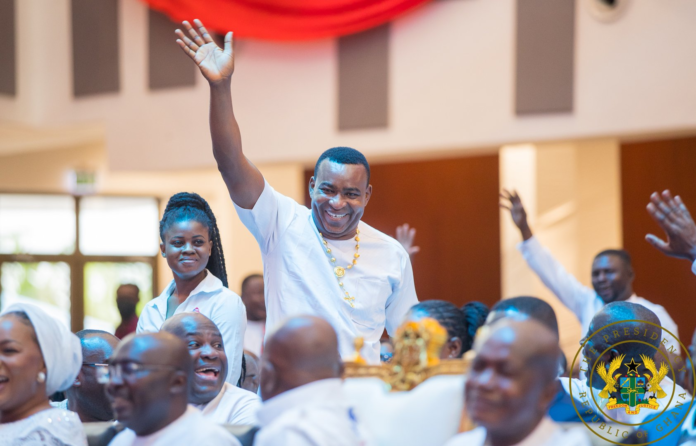

In the unforgiving theatre of politics, where timing is everything and loyalty is often transactional; few moves are as quietly profound as the one recently undertaken by Bernard Antwi Boasiako, the Ashanti Regional Chairman of the New Patriotic Party who is seeking to lead the party as the next National Chairman.
The just-ended nationwide tour, engaging every party executive both constituency and regional- across all regions, raises a compelling question: was this a calculated political gamble, or a bold expression of absolute faith in a leadership whose very future remains uncertain?
Modern politics has shown that gestures speak louder than showing up. When a leader chooses to leave the comfort of the centre and travel town by town, region by region to sit with the people who form the backbone of a party’s electoral machine, it signals something deeper than routine consultation. It signals conviction.
At first glance, the skepticism is understandable. Why invest time, energy, and significant financial resources in engaging executives who may not even retain their positions after impending internal elections? Why not keep your money and energy till it becomes clear who will vote in the September, 2026 NPP National elections?
In a political culture often driven by expediency, where allegiances shift with electoral tides, such a move could easily be dismissed as ill considered. But to reduce Wontumi’s tour to mere risk is to misunderstand the deeper philosophical undercurrents guiding his approach. This is not a gamble—it is conviction.
Mr. Bernard Antwi Boasiako’s decision reflects a political philosophy closely aligned with the principles of institutionalism, a school of thought which holds that strong, enduring political institutions, not just individuals, are the bedrock of democratic success. By choosing to engage current executives irrespective of their uncertain futures, he sends a powerful message: leadership is not about betting on winners, but about strengthening the very system that produces them. In doing so, he elevates the party above personalities and anchors it in continuity, respect, and collective purpose.
Even more compelling is how this approach resonates with elements of Transformational leadership theory. Transformational leaders, ideally, do not merely chase power; they inspire belief, build trust, and instill confidence in others, even in moments of doubt.
By reaching out to executives who are themselves unsure of their political fate, chairman Wontumi communicates something rare in politics you matter, not just for what you may become, but for what you are today. That message is both disarming and empowering.
For the executives themselves, the impact of such engagement cannot be overstated. These are individuals operating in a climate of uncertainty, where internal contests loom and the threat of displacement is real. Yet, in choosing to meet them now not after they have secured victory Wontumi affirms their dignity and validates their contributions. It transforms anxiety into assurance. It replaces doubt with renewed purpose. It tells them that their work is seen, their sacrifices acknowledged, and their relevance unquestioned.
This clearly explains why voices within the party, such as Anthony Namoo, Upper East Regional Chairman of the party have described the move as one of “strong political wisdom and novelty.” Indeed, Chairman Namoo’s characterization is both apt and revealing.
In a political environment where many would wait for the dust of internal elections to settle before making strategic moves, Bernard Antwi Boasiako has chosen to act before certainty emerges. That is not recklessness it is leadership anchored in faith.
And perhaps that is the most important takeaway: Wontumi’s tour is not about who wins or loses internal contests. It is about building a psychological contract with the entire executive body present and future alike. By investing in the current leadership, he simultaneously invests in the future leadership, because institutions are sustained not by individuals alone, but by the culture of respect and inclusion that binds them together.
As the party inches closer to its internal elections, the ripple effects of this engagement are already evident. Executives, once uncertain and apprehensive, now carry a renewed sense of belonging and confidence. They are more likely to approach the contest not as a battle for survival, but as a process within a system that values them regardless of outcome. This shift in mindset could prove decisive, not just for internal cohesion, but for the party’s broader electoral fortunes.
In the end, what Wontumi has demonstrated is a rare and powerful truth: the strongest political strategies are not always those that calculate outcomes with precision, but those that invest in people with unwavering faith. His tour is a statement bold, unconventional, and deeply strategic that leadership is not about aligning with certainty, but about creating it.
And so, what may have appeared to some as a risk now stands revealed as something far greater: a deliberate act of trust in the very soul of the party. A reminder that in politics, as in life, those who believe in people before they are certain of them are often the ones who shape the future.
The writer is a Member of Team WONTUMI Campaign.