

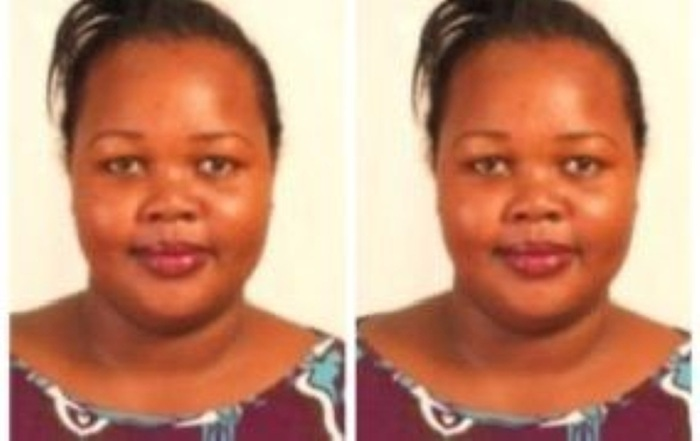
After a decade-long legal battle for recognition, Chepkoech Too has emerged victorious in a high-stakes succession case that has captivated Kenya.
Last week, the High Court in the city of Eldoret officially declared her the biological daughter of the late Mark Kiptarbei Arap Too, a legendary power broker of the KANU era.
The ruling, delivered by Presiding Judge Anuro Wananda, grants Chepkoech legal status as a beneficiary of an estate estimated at Sh7 billion (about $54 million).
“The only way to resolve the issue of my paternity is to order a DNA test to enable me to get a share of my father’s estate,” Chepkoech previously stated in court, according to The Star Kenya.
The long-standing family dispute, which years of internal politics could not resolve, was finally settled by a court decision based on conclusive DNA evidence from the Kenya Medical Research Institute (KEMRI).
The samples provided by Chepkoech were analysed alongside those of Arafat Mohammed Bakari, who was already acknowledged as the late politician’s biological son.
The test results definitively confirmed that Chepkoech and Bakari are half-siblings, sharing the same father.
Mark Too, a towering figure in the administration of President Daniel Arap Moi, was an immensely influential man, despite never winning an elective seat.
Known as “Mr. Fix-It” or “Bwana Dawa,” his quiet but profound influence as a close confidant of the former president was instrumental in shaping the nation’s trajectory.
His most notable political maneuver occurred when he resigned his nominated seat in Parliament to pave the way for a young Uhuru Kenyatta.
This strategic move allowed the future president to enter the legislature, a debt of gratitude Kenyatta acknowledged years later.
Beyond the corridors of power, Mark Too was a savvy businessman whose career was forged at the British conglomerate Lonrho, where he developed the negotiating prowess that helped him build a vast agricultural and real estate empire across the Rift Valley, according to Billionaires.
When Too passed away on December 31, 2016, he left behind a massive portfolio of assets spread across multiple counties.
The estate includes 19 expansive farms in Uasin Gishu, Nakuru, Nandi, and Trans Nzoia, along with prime residential properties in Nairobi’s Muthaiga and Lavington suburbs.
His holdings also feature dozens of vehicles, trailers, tractors, and significant shares in six major companies.
Since his death at age 60, the estate has been managed by his two widows, Mary and Sophie Too.
While Mary, the first wife, has five children and the second wife, Sophie, has three, the succession has been complicated by several children born outside these marriages seeking their rightful share.
Sophie had remained firm in her opposition to Chepkoech’s claims, acknowledging only two other sons, Ali and Bakari, while dismissing Chepkoech entirely.
This dismissal forced Chepkoech to seek the intervention of the court, arguing that science was the only path to the truth. With the KEMRI results now validating her claim, Judge Wananda’s declaration ensures that she will participate in the eventual distribution of the Sh7 billion empire.
While this ruling provides a definitive answer to the question of paternity, the legal journey is far from over. The court must now navigate the complex task of dividing the vast fortune among the children of the two widows and at least four other heirs born outside the marriages.
As the succession proceedings continue, the case remains one of the largest and most significant private estate disputes in Kenya’s recent history.
Source: face2faceafrica