


The Minority Leader in Parliament, Alexander Kwamena Afenyo-Markin, has said the One District One Factory (1D1F) initiative reflects the economic philosophy of the Danquah–Dombo–Busia tradition, which promotes private sector-led growth with the state creating an enabling environment for businesses to thrive.
Mr. Afenyo-Markin made the remarks while delivering a lecture at the maiden lecture series of the Institute of Economic Research and Public Policy (IERPP) held in Accra on Monday, March 2, 2026, under the theme “Centre Right Impact on Ghana’s Political Landscape.”

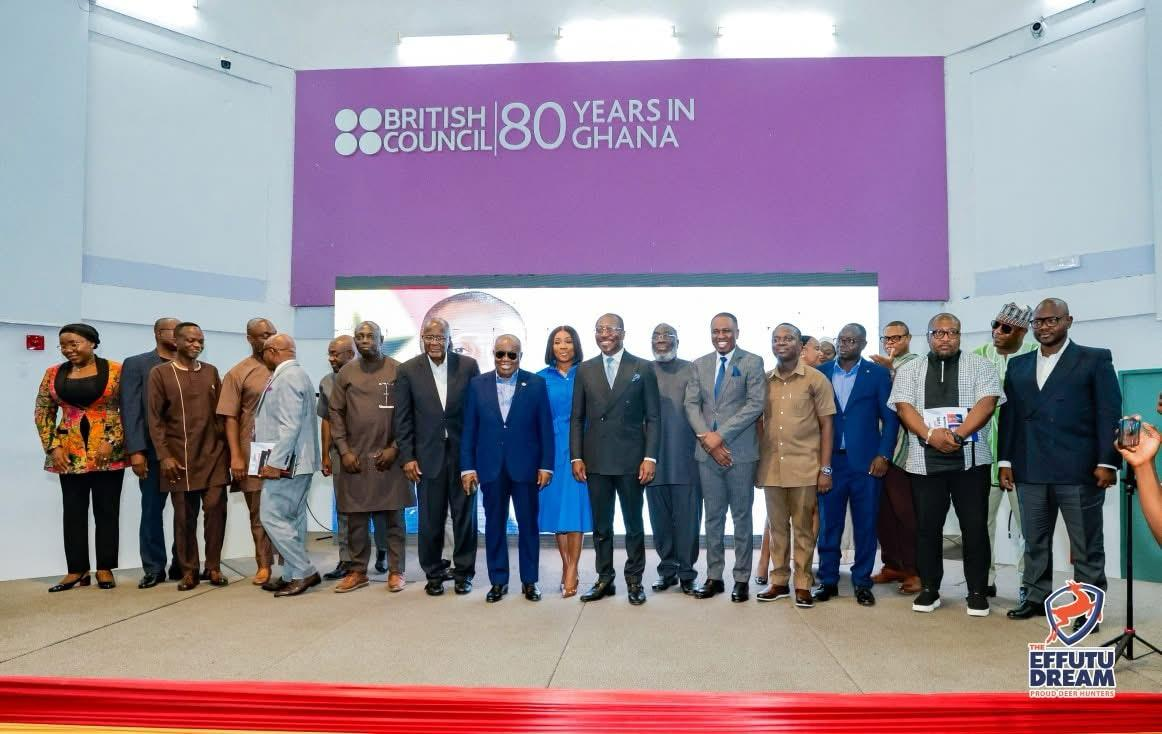
The event drew several stalwarts of the New Patriotic Party, including former President Nana Addo Dankwa Akufo-Addo. The programme was chaired by veteran politician and former Majority Leader Hackman Owusu-Agyemang.
Addressing participants, the Minority Leader said the 1D1F initiative was designed to decentralise industrial development and expand economic opportunities across districts rather than concentrate industries in major cities.
“The One District One Factory initiative represents one of the most practical expressions of the Danquah–Busia–Dombo tradition’s belief in private sector-led development, supported but not dominated by the state,” he said.

According to him, the policy sought to democratise industrialisation by extending productive opportunities beyond traditional urban centres and integrating local economies into national and global value chains.
“Instead of concentrating industrial growth in Accra and a few metropolitan areas, the policy aimed to anchor economic activity across districts and integrate local economies into national and global value chains,” he explained.
Mr. Afenyo-Markin noted that the programme created incentives and support systems to encourage private sector participation, including credit facilitation and infrastructure support.
Providing an update on the progress of the initiative, he said data as of the end of 2023 showed that more than 300 1D1F projects were at different stages of implementation nationwide.
Some of the factories, he noted, are already operational while others remain under construction.
“These projects have generated tens of thousands of direct and indirect jobs while helping to add value to locally produced raw materials in different parts of the country,” he said.
He stressed that the initiative was aimed at ensuring that industrial growth benefits communities across the country.
Beyond the industrialisation policy, the Minority Leader also reflected on the ideological foundation of the centre-right tradition in Ghana, which he traced to the political philosophy associated with three nationalist figures — J. B. Danquah, Kofi Abrefa Busia and Simon Diedong Dombo.
“I rise today to speak about the enduring political philosophy that has shaped a significant part of Ghana’s democratic journey the Danquah–Dombo–Busia tradition,” he said.
“This tradition is not merely a political label; it is a body of ideas, principles and values that have guided generations of leaders who believe in freedom, enterprise and accountable governance.”
He explained that Dr. Danquah championed constitutionalism, the rule of law and the protection of individual liberty, emphasising that a nation thrives when citizens are free to pursue opportunities and participate fully in political and economic life.
Mr. Afenyo-Markin also highlighted the role of education in expanding opportunity and strengthening economic participation.
Quoting an educationist, he noted that education remains the primary tool through which individuals develop their talents, improve productivity and contribute meaningfully to national development.
Within that context, he said the Free Senior High School (Free SHS) policy reflects the centre-right belief in expanding opportunity through empowerment.
“Free SHS is therefore not a departure from a centre-right philosophy. On the contrary, it is one of its most practical expressions,” he said.
“It sends a clear message to every Ghanaian child: your background does not determine your future; your effort and talent do.”
The Minority Leader stressed that policies such as 1D1F demonstrate how ideological principles can be translated into practical programmes aimed at reducing regional disparities and strengthening local economies.
“Industrialisation must not be confined to a few cities,” he said.
“When we expand opportunity across districts, we create jobs, strengthen local economies and build a more inclusive national economy.”
The lecture series organised by the Institute of Economic Research and Public Policy is expected to provide a platform for discussions on economic policy, governance and the role of political ideas in shaping Ghana’s development trajectory.